When Real Estate Lawyers Go Overboard: The Art of Asking for What Is Unnecessary
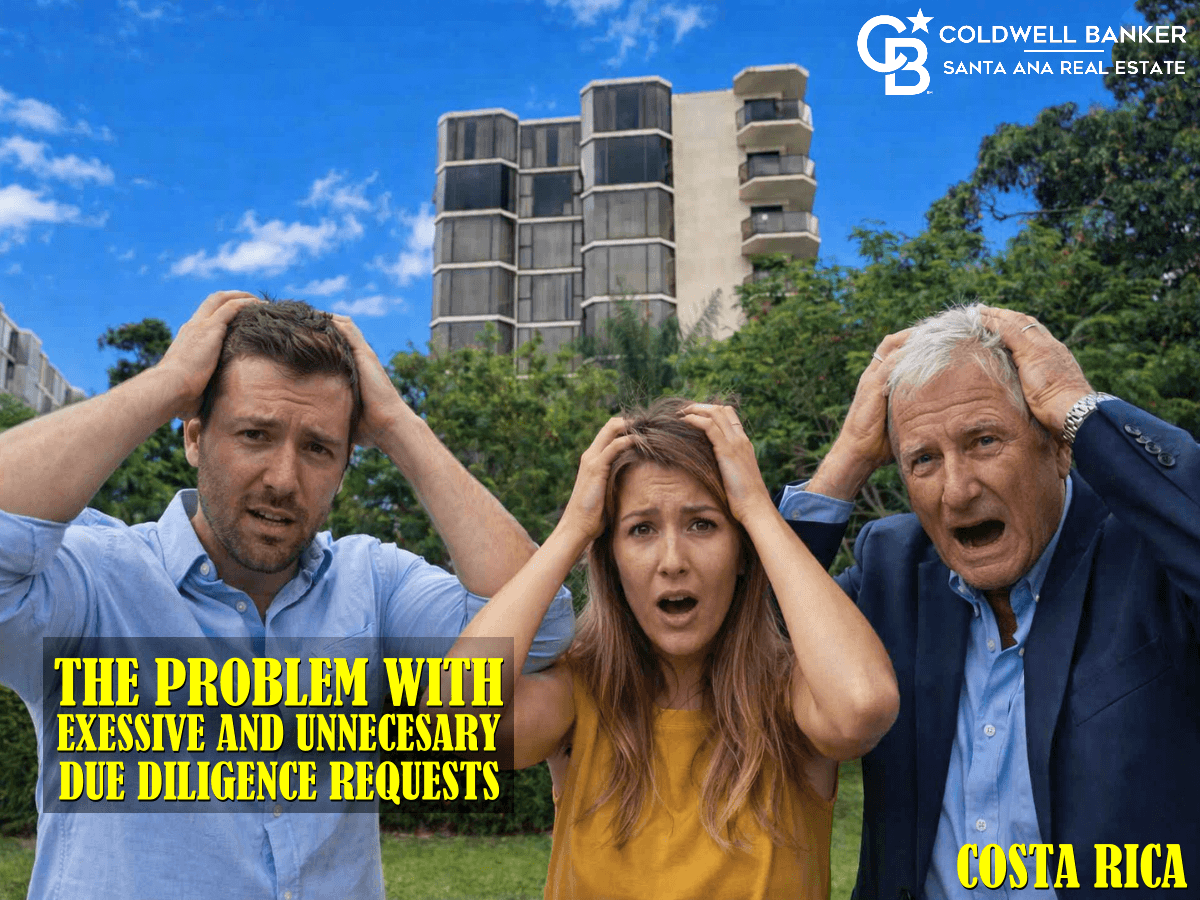
If you’ve bought or sold property in Costa Rica, you’ve probably met that lawyer—the one who turns a perfectly normal closing into a scavenger hunt for documents that either are impossible to obtain, aren’t required, or stopped being relevant sometime around the Oscar Arias administration.
Most real estate attorneys do a great job. They protect their clients, verify ownership, check for liens, and make sure the property is legally sound, which is their job. But every now and then, you run into a lawyer who treats a simple condo purchase like a forensic investigation of the Titanic wreck. And when that happens, the due diligence process becomes… well, let’s call it “creative.”
The problem usually starts with the Letter of Intent (LOI) or Sales Purchase Agreement (SPA). Many lawyers use templates—long, detailed documents meant to cover every possible scenario. That’s fine. Templates are useful. But some attorneys forget to remove the parts that don’t apply. Suddenly, you’re being asked for documents that make absolutely no sense for the property being purchased.
Zoning
Take zoning (uso de suelo), for example. If you’re buying raw land, a farm, or a single‑family home in a neighborhood, asking for zoning is perfectly normal. But when the property is inside a condominium that was built twenty years ago, with hundreds of units already occupied, pools splashing, kids playing, and the HOA collecting fees like clockwork… asking for zoning is like asking a married couple for proof they’re still dating.
Blueprints
Then come the blueprints. Sure, blueprints matter when you’re building something new. But requesting original blueprints for a condo built in 2004? Those plans are probably in a dusty box in the developer’s old office—if the office still exists. And even if you found them, they wouldn’t tell you anything you can’t already see by walking into the unit. Or the developer who built only that one condo might have moved elsewhere with the profits, changed their name, or no longer has the documentation because they've built 50 other projects in the meantime.
When you want to purchase a house, the owner might still have the original blueprints. But when you're dealing with the 2nd or 3rd owner, those blueprints might be long lost. You probably won't be able to recover them at the engineering department in the municipality. You can try to track down the original builder of the house, maybe he keeps the information on a floppy disk that you won't be able to recover. Does it makes sense to lose the sale of the home that you want to buy because the blueprints cannot be recovered? Discuss this with your lawyer and see if the recommentions make sense or not.
Building Permits
Next on the list: building permits. Again, great for new construction. Or for a single family home that might have an illegally built second floor. But for a condo that’s been standing for two decades? The building permit served its purpose long ago. The building is there. People live in it. The municipality has been collecting taxes on it for years. Asking for the original permit is like asking your grandmother for her kindergarten report card.
And let’s not forget the visado for the survey map. In a condominium, the official plano is registered once—when the entire project is approved. Individual units don’t get their own visado. Requesting one is simply a misunderstanding of how condos work.
Finally, the classics
- Water letter,
- Proof of electricity,
- Proof of water connection.
In a condo, the simplest and most accurate proof is the monthly utility bill. If ICE and AyA are sending invoices, trust me—the property has power and water.
Killing the Deal?
When lawyers overdo due diligence, they don’t just slow down the process—they risk killing the deal. Buyers get nervous. Sellers get frustrated. Everyone starts imagining problems that don’t exist.
Choose an experienced real estate attorney who not only speaks your language but also has a good sense of what is necessary and what is not. Don’t lose a perfectly good purchase because your lawyer is exaggerating requests that turn the buyer against you.
I am Ivo Henfling, a 37-year real estate veteran and widely regarded as the leading real estate authority in Costa Rica, now with Coldwell Banker Santa Ana. Are you ready to purchase or sell one of the most beautiful Costa Rican homes now? Then contact us now.